How to Initialize a String Array in Java
- Method 1: Using an Array Literal
-
Method 2: Using the
newKeyword - Method 3: Using a Loop
-
Method 4: Using
Streamin Java - Conclusion
- FAQ
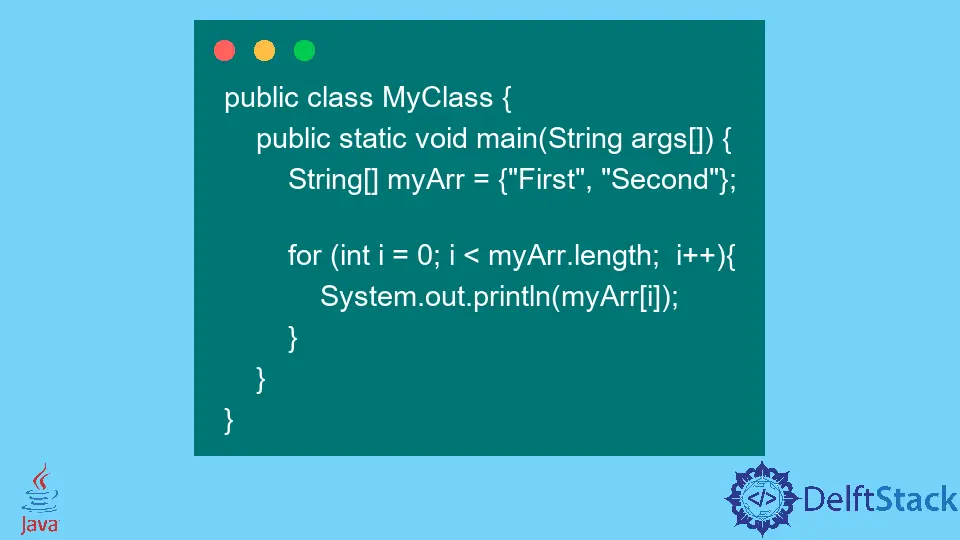
When diving into Java programming, one of the fundamental concepts you’ll encounter is the manipulation of arrays. Arrays are essential data structures that allow you to store multiple values in a single variable. Among various types of arrays, String arrays are particularly useful for handling collections of text data. Knowing how to initialize a String array in Java is crucial for effective programming, whether you’re dealing with user inputs, file data, or any other string-based information.
This article will guide you through several methods to initialize a String array in Java. We’ll explore the syntax, provide clear code examples, and explain each method in detail. By the end of this article, you’ll have a solid understanding of how to create and manipulate String arrays, setting a strong foundation for your Java programming journey.
Method 1: Using an Array Literal
One of the simplest ways to initialize a String array in Java is by using an array literal. This method allows you to declare and initialize the array in a single line of code, making it concise and easy to read.
String[] fruits = {"Apple", "Banana", "Cherry"};
In this example, we declare a String array called fruits and initialize it with three values: “Apple,” “Banana,” and “Cherry.” This method is particularly useful when you know the values you want to store in advance. The array’s size is automatically determined based on the number of elements provided in the literal.
You can access individual elements of the array using their index. For instance, fruits[0] will return “Apple,” while fruits[1] will return “Banana.” This method is efficient for small datasets where you can define the values at the time of declaration.
Output:
Apple
Banana
Cherry
Method 2: Using the new Keyword
Another common way to initialize a String array is by using the new keyword. This method is beneficial when you want to create an array without initializing it with values immediately.
String[] colors = new String[3];
colors[0] = "Red";
colors[1] = "Green";
colors[2] = "Blue";
In this code snippet, we first declare a String array called colors and specify its size as 3 using the new keyword. After that, we assign values to each index of the array. This approach is particularly useful when the values are not known at the time of declaration, allowing you to fill the array dynamically later in your code.
Accessing the elements works the same way as in the previous method. For example, colors[0] will give you “Red.” This method provides flexibility for initializing arrays when the data may come from user input or external sources.
Output:
Red
Green
Blue
Method 3: Using a Loop
If you need to initialize a String array with a large number of elements or if the values are generated dynamically, using a loop is an effective approach. This method allows you to fill the array programmatically.
String[] animals = new String[5];
String[] animalNames = {"Cat", "Dog", "Elephant", "Tiger", "Lion"};

for (int i = 0; i < animals.length; i++) {
    animals[i] = animalNames[i];
}
In this example, we declare a String array called animals with a size of 5. We also create another String array, animalNames, containing the names of various animals. Using a for loop, we iterate over the animals array and assign values from the animalNames array to it. This method is particularly useful when dealing with larger datasets or when the values are generated or fetched from another source.
After executing this code, you can access the animals array just like before. For instance, animals[2] will return “Elephant.” This approach provides great flexibility and allows for more complex initialization logic.
Output:
Cat
Dog
Elephant
Tiger
Lion
Method 4: Using Stream in Java
For Java 8 and above, we can make use of Stream to initialize an array of Strings with given values. The below example illustrates this:
import java.util.stream.*;
public class MyClass {
  public static void main(String args[]) {
    String[] strings = Stream.of("First", "Second", "Third").toArray(String[] ::new);
    for (int i = 0; i < strings.length; i++) {
      System.out.println(strings[i]);
    }
  }
}
Output:
First
Second
Third
What’s happening is that we’re creating a stream of words - "First", "Second", and "Third" - and then converting that stream directly into an array. The String[]::new bit might look a bit weird if you’re not used to it, but it’s just telling Java to make a new String array that’s the right size for our data.
After that, it’s business as usual. The code loops through the array and prints out each word. Nothing fancy there, just a standard for loop doing its thing.
It’s a cool example of how you can do more with less code in modern Java. Sure, it might look a bit cryptic at first glance, but once you get the hang of it, it’s pretty handy.
Conclusion
In conclusion, initializing a String array in Java can be accomplished in several ways, each suited to different scenarios. Whether you choose to use an array literal for simplicity, the new keyword for flexibility, or a loop for dynamic initialization, understanding these methods will enhance your programming skills. As you continue your Java journey, mastering array initialization will empower you to handle text data efficiently, opening doors to more complex programming challenges.
By incorporating these techniques into your coding practices, you’ll be well-equipped to tackle any project that requires string manipulation. Keep experimenting with different methods, and soon you’ll find the best approach for your particular needs.
FAQ
-
What is a String array in Java?
A String array in Java is a data structure that allows you to store multiple strings in a single variable, enabling efficient management of text data. -
Can I initialize a String array without specifying its size?
Yes, you can initialize a String array without specifying its size by using an array literal, where you directly assign values to the array. -
How do I access elements in a String array?
You can access elements in a String array using their index, starting from 0. For example,arrayName[0]accesses the first element. -
What if I need to initialize an array with a large number of elements?
You can use a loop to initialize a String array dynamically, allowing you to fill it with values programmatically. -
Is it possible to change the size of a String array after initialization?
No, the size of a String array in Java is fixed once it is created. If you need a resizable array, consider using anArrayListinstead.