How to Check if String Is Empty in PowerShell
-
Method 1: Using the
-eqOperator -
Method 2: Using the
String.IsNullOrEmpty()Method -
Method 3: Using the
-notOperator - Method 4: Using the Length Property
- Conclusion
- FAQ
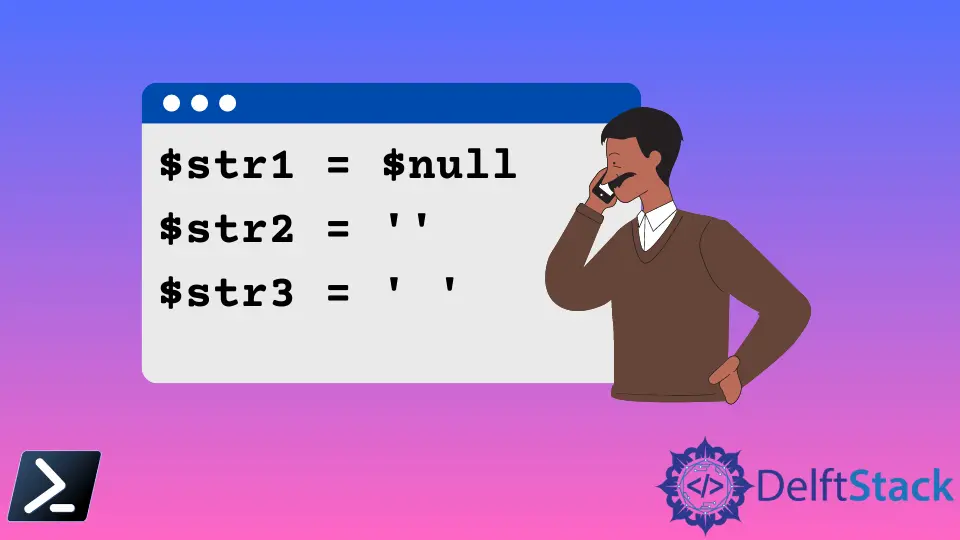
When working with PowerShell, one of the most common tasks you’ll encounter is checking whether a string is empty or null. This is crucial, especially when dealing with user input, configuration files, or data fetched from external sources. An empty string can lead to errors in your scripts, making it essential to validate strings before processing them. In this article, we’ll explore various methods to check if a string is empty in PowerShell, providing you with the tools to write more robust and error-free scripts.
Understanding how to handle strings effectively can significantly enhance your PowerShell scripting skills. Whether you’re a beginner or an experienced user, mastering these techniques will help you manage strings with confidence. So, let’s dive into the different methods you can use to check if a string is empty or null in PowerShell.
Method 1: Using the -eq Operator
One of the simplest ways to check if a string is empty in PowerShell is by using the -eq operator. This operator allows you to compare a string to an empty string (""). If the string is empty, the comparison will return true.
$string = ""

if ($string -eq "") {
    "The string is empty."
} else {
    "The string is not empty."
}
Output:
The string is empty.
In this example, we initialize the variable $string with an empty string. By using the -eq operator, we check if $string is equal to "". If it is, we output a message indicating that the string is empty. This method is straightforward and works well for basic checks.
Method 2: Using the String.IsNullOrEmpty() Method
PowerShell also provides a more robust way to check for empty strings through the String.IsNullOrEmpty() method. This method checks both if a string is null and if it is an empty string, providing a more comprehensive validation.
$string = $null

if ([string]::IsNullOrEmpty($string)) {
    "The string is null or empty."
} else {
    "The string has a value."
}
Output:
The string is null or empty.
In this example, we set $string to $null. By calling [string]::IsNullOrEmpty($string), we can check if the string is either null or empty. This is particularly useful when you want to ensure that your variable has a valid value before proceeding with further operations. It’s a best practice to use this method when working with user inputs or data from external sources.
Method 3: Using the -not Operator
Another simple but effective method for checking if a string is empty is by using the -not operator. This operator negates the truthiness of the condition, allowing you to check if a string is either null or empty.
$string = "Hello, World!"

if (-not $string) {
    "The string is empty."
} else {
    "The string has content."
}
Output:
The string has content.
In this case, we initialize $string with “Hello, World!”. The -not operator checks if $string is not truthy. If it is empty or null, it will evaluate to true, and the corresponding message will be displayed. This approach is concise and can be easily integrated into conditional statements.
Method 4: Using the Length Property
You can also check if a string is empty by examining its length. The Length property of a string returns the number of characters it contains. If the length is zero, the string is empty.
$string = ""

if ($string.Length -eq 0) {
    "The string is empty."
} else {
    "The string has content."
}
Output:
The string is empty.
In this example, we check the length of $string. If it equals zero, we conclude that the string is empty. This method is particularly useful when you need to perform additional operations based on the length of the string, such as trimming or formatting.
Conclusion
Checking if a string is empty in PowerShell is a fundamental skill that can save you from potential errors in your scripts. By utilizing methods such as the -eq operator, String.IsNullOrEmpty(), the -not operator, and examining the string length, you can ensure that your scripts handle string data robustly and efficiently. Each method has its advantages, and understanding them will empower you to write cleaner, more effective PowerShell code.
As you continue to develop your PowerShell skills, remember that validating input is key to creating reliable scripts. So, practice these methods and incorporate them into your coding routine to enhance your programming proficiency.
FAQ
-
How do I check if a variable is null in PowerShell?
You can use the-eq $nullcomparison to check if a variable is null. -
Can I check for whitespace in a string?
Yes, you can use theTrim()method to remove whitespace and then check if the string is empty. -
What happens if I use an uninitialized variable?
An uninitialized variable in PowerShell is treated as$null, which you can check using the methods mentioned. -
Is it necessary to check for empty strings?
Yes, checking for empty strings is crucial to avoid runtime errors and ensure your scripts run smoothly. -
Can I combine these methods in a script?
Absolutely! You can use multiple methods to validate strings based on your specific needs.

Nimesha is a Full-stack Software Engineer for more than five years, he loves technology, as technology has the power to solve our many problems within just a minute. He have been contributing to various projects over the last 5+ years and working with almost all the so-called 03 tiers(DB, M-Tier, and Client). Recently, he has started working with DevOps technologies such as Azure administration, Kubernetes, Terraform automation, and Bash scripting as well.
Related Article - PowerShell String
- Array of Strings in PowerShell
- How to Check if a File Contains a Specific String Using PowerShell
- How to Extract a PowerShell Substring From a String
- How to Extract Texts Using Regex in PowerShell
- How to Generate Random Strings Using PowerShell
- How to Escape Single Quotes and Double Quotes in PowerShell