How to Get the Object's Value by a Reference to the Key
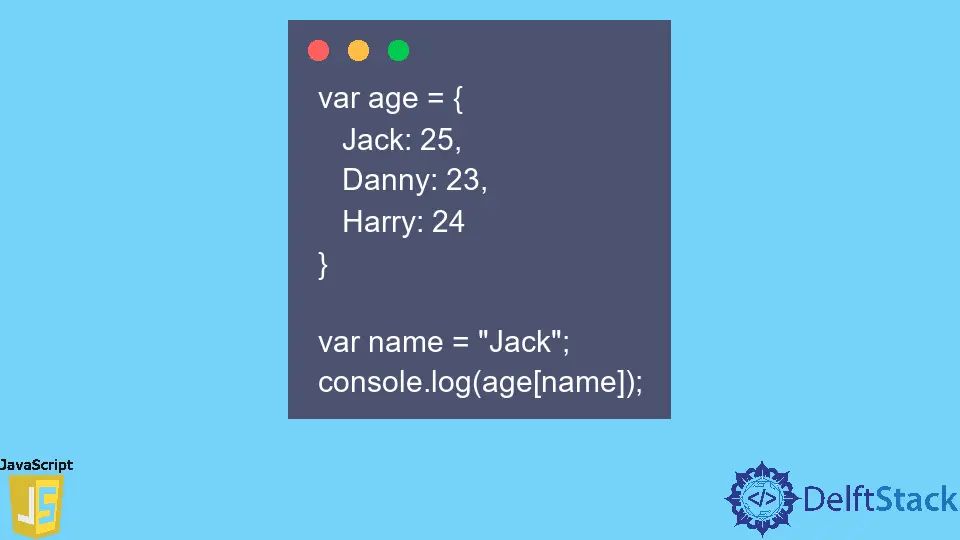
When working with JavaScript, one of the most fundamental tasks is accessing values within objects. Objects are key-value pairs, and sometimes you may find yourself needing to retrieve a value using a reference to its key. This process might seem straightforward, but understanding the nuances can enhance your coding efficiency and clarity. In this tutorial, we will explore various methods to access an object’s value by referencing its key, while also providing practical examples to solidify your understanding.
Whether you are a beginner or an experienced developer, mastering this skill can significantly improve your JavaScript coding capabilities. We will delve into different approaches, including bracket notation and the Object.keys method, to ensure you have a comprehensive grasp of how to access values effectively. Let’s get started!
Using Bracket Notation
One of the most straightforward methods to access a value in an object is through bracket notation. This approach allows you to use a variable that holds the key name, making it dynamic and flexible. Here’s how it works:
const person = {
    name: "Alice",
    age: 30,
    city: "New York"
};

const key = "age";
const value = person[key];

console.log(value);
In this example, we have an object called person with three properties: name, age, and city. Instead of hardcoding the key, we store it in a variable called key. By using bracket notation, we can access the value associated with age. The output will be:
30
This method is particularly useful when the key name is stored in a variable or when the key is not a valid identifier (like containing spaces or special characters). Bracket notation also allows for dynamic key access, which can be incredibly helpful in loops or when dealing with user input.
Using Object.keys()
Another powerful way to retrieve values from an object is by using the Object.keys() method. This method returns an array of a given object’s own enumerable property names, which you can then use to access the values. Here’s how to implement it:
const car = {
    make: "Toyota",
    model: "Camry",
    year: 2020
};

const key = "model";
const keys = Object.keys(car);
const value = car[keys.find(k => k === key)];

console.log(value);
In this code snippet, we define an object named car with properties make, model, and year. We use Object.keys() to retrieve an array of the keys. Then, we find the specific key we want and use it to access the corresponding value. The output will be:
Camry
This method is particularly beneficial when you want to filter or manipulate the keys before accessing their values. It provides a clear structure for working with objects and can be easily integrated into more complex logic.
Using Object.entries()
The Object.entries() method is another useful approach for accessing values by key reference. This method returns an array of the object’s own enumerable string-keyed property [key, value] pairs. This allows you to work with both keys and values simultaneously. Here’s how it can be done:
const student = {
    name: "Bob",
    grade: "A",
    subject: "Math"
};

const key = "subject";
const entries = Object.entries(student);
const value = entries.find(([k, v]) => k === key)[1];

console.log(value);
In this example, we have an object called student. By using Object.entries(), we create an array of key-value pairs. We then search for the desired key and retrieve its corresponding value. The output will be:
Math
This method is particularly advantageous when you need to access both the key and its value simultaneously, allowing for more complex operations. The combination of destructuring and array methods makes this approach very powerful and versatile.
Conclusion
Accessing an object’s value by referencing its key in JavaScript is a fundamental skill that every developer should master. Whether you choose bracket notation, Object.keys(), or Object.entries(), each method offers unique advantages depending on your specific use case. By understanding these techniques, you can write cleaner, more efficient code that enhances your overall programming experience.
As you continue to explore the world of JavaScript, remember that practice makes perfect. Experiment with these methods in your projects, and soon enough, retrieving values from objects will become second nature.
FAQ
-
What is the difference between bracket notation and dot notation?
Bracket notation allows for dynamic key access using variables, while dot notation requires the key to be a valid identifier. -
Can I use a variable as a key in an object?
Yes, you can use a variable to access an object’s value using bracket notation. -
What does Object.keys() return?
Object.keys() returns an array of the object’s own enumerable property names. -
How can I access both keys and values from an object?
You can use Object.entries() to get an array of key-value pairs, allowing you to access both simultaneously. -
Are there any performance differences between these methods?
Generally, the performance differences are negligible for small objects, butObject.keys()andObject.entries()may be slower for larger objects due to array creation.

Subodh is a proactive software engineer, specialized in fintech industry and a writer who loves to express his software development learnings and set of skills through blogs and articles.
LinkedIn