How to Read/Write From/to a File in Go
- Reading a File in Go
- Writing to a File in Go
- Appending to a File in Go
- Reading a File Line by Line in Go
- Conclusion
- FAQ
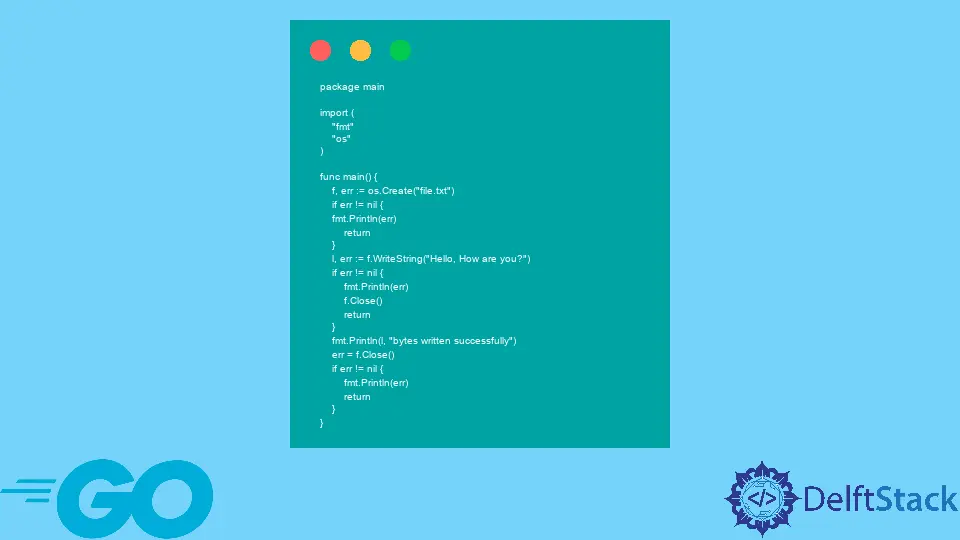
In the world of programming, handling files is a fundamental skill that every developer should master. Whether you’re building a simple application or a complex system, the ability to read from and write to files is essential. In Go, this task is straightforward and efficient, thanks to its robust standard library. This tutorial will guide you through the process of reading and writing files in Go, providing clear examples and explanations.
Understanding how to manipulate files can greatly enhance your programming capabilities. By the end of this tutorial, you’ll have a solid grasp of file operations in Go, enabling you to manage data effectively and streamline your coding projects. Let’s dive in and explore the various methods to read and write files in Go!
Reading a File in Go
Reading a file in Go can be accomplished using the os and io/ioutil packages. Below is a simple example that demonstrates how to read the contents of a file.
package main

import (
    "fmt"
    "io/ioutil"
    "log"
)

func main() {
    data, err := ioutil.ReadFile("example.txt")
    if err != nil {
        log.Fatal(err)
    }
    fmt.Println(string(data))
}
In this code, we begin by importing the necessary packages: fmt, io/ioutil, and log. The ioutil.ReadFile function is used to read the entire content of the specified file, which in this case is example.txt. If the file is read successfully, its contents are stored in the data variable. If an error occurs during this process, it is logged using log.Fatal(err), which will terminate the program and print the error message. Finally, we convert the byte slice to a string and print it to the console.
Output:
This is an example file.
This method is efficient for reading small to medium-sized files. However, if you’re dealing with larger files or need to read the file line by line, you might want to consider using a buffered reader, which allows for more controlled reading.
Writing to a File in Go
Writing data to a file in Go is just as simple as reading it. The os package provides the necessary functions to create or overwrite files. Here’s a straightforward example of how to write to a file.
package main

import (
    "fmt"
    "os"
)

func main() {
    content := []byte("This is some content to write to the file.")
    err := os.WriteFile("output.txt", content, 0644)
    if err != nil {
        fmt.Println(err)
    }
}
In this example, we create a byte slice called content that contains the text we wish to write to the file. The os.WriteFile function is then called with three arguments: the name of the file (output.txt), the content to write, and the file permissions (0644). If the function encounters an error, it is printed to the console.
This method is particularly useful for creating new files or overwriting existing ones. The file permissions ensure that the file is readable and writable by the owner, and readable by others, which is a good default setting.
Appending to a File in Go
Sometimes, you might want to add content to an existing file without overwriting its current contents. For this, you can use the os.OpenFile function with the os.O_APPEND flag. Here’s how you can do that.
package main

import (
    "fmt"
    "os"
)

func main() {
    file, err := os.OpenFile("output.txt", os.O_APPEND|os.O_CREATE|os.O_WRONLY, 0644)
    if err != nil {
        fmt.Println(err)
        return
    }
    defer file.Close()

    if _, err := file.WriteString("Appending this line to the file.\n"); err != nil {
        fmt.Println(err)
    }
}
In this snippet, we open the file output.txt using os.OpenFile. The flags os.O_APPEND, os.O_CREATE, and os.O_WRONLY are used to specify that we want to append to the file, create it if it doesn’t exist, and open it in write-only mode. After checking for errors, we use file.WriteString to append a new line of text. The defer file.Close() statement ensures that the file is properly closed after the operations are completed.
This method is particularly useful when you need to log events or keep a record of data without losing previous entries.
Reading a File Line by Line in Go
When working with large files, reading the entire content at once may not be efficient. In such cases, you can read a file line by line using the bufio package. Here’s an example that demonstrates this approach.
package main

import (
    "bufio"
    "fmt"
    "os"
)

func main() {
    file, err := os.Open("example.txt")
    if err != nil {
        fmt.Println(err)
        return
    }
    defer file.Close()

    scanner := bufio.NewScanner(file)
    for scanner.Scan() {
        fmt.Println(scanner.Text())
    }
    if err := scanner.Err(); err != nil {
        fmt.Println(err)
    }
}
In this example, we open the file example.txt and create a new scanner using bufio.NewScanner. The scanner reads the file line by line, allowing us to process each line individually. The scanner.Scan() method returns true as long as there are lines to read. We then print each line using scanner.Text(). After reading, we check for any errors that may have occurred during the scanning process.
This method is highly efficient for processing large files, as it minimizes memory usage by reading one line at a time.
Conclusion
Mastering file operations in Go is a crucial skill for any developer. Whether you’re reading, writing, or appending to files, Go provides a straightforward and efficient way to handle these tasks. By following the methods outlined in this tutorial, you can effectively manage file I/O in your applications. With practice, you’ll find that working with files in Go becomes second nature, allowing you to focus on building more complex features in your projects.
FAQ
-
How do I handle errors when reading or writing files in Go?
You can use the error handling pattern withif err != nilto check for errors after file operations. This allows you to gracefully handle issues like missing files or permission errors. -
Can I read a file without loading it entirely into memory?
Yes, you can read a file line by line using thebufiopackage, which is efficient for large files. -
What file permissions should I use when creating a file in Go?
A common permission setting is 0644, which allows the owner to read and write, while others can only read the file. -
Is it possible to create a new file if it doesn’t exist when writing in Go?
Yes, you can use theos.O_CREATEflag when opening a file to create it if it doesn’t already exist. -
How can I ensure a file is closed after I’m done using it?
You can use thedeferstatement to close the file immediately after opening it, ensuring that it gets closed when the function exits.