How to GroupBy and Aggregate Multiple Columns in Pandas
- Understanding GroupBy in Pandas
- Aggregating with Multiple Functions
- Custom Aggregation Functions
- Conclusion
- FAQ
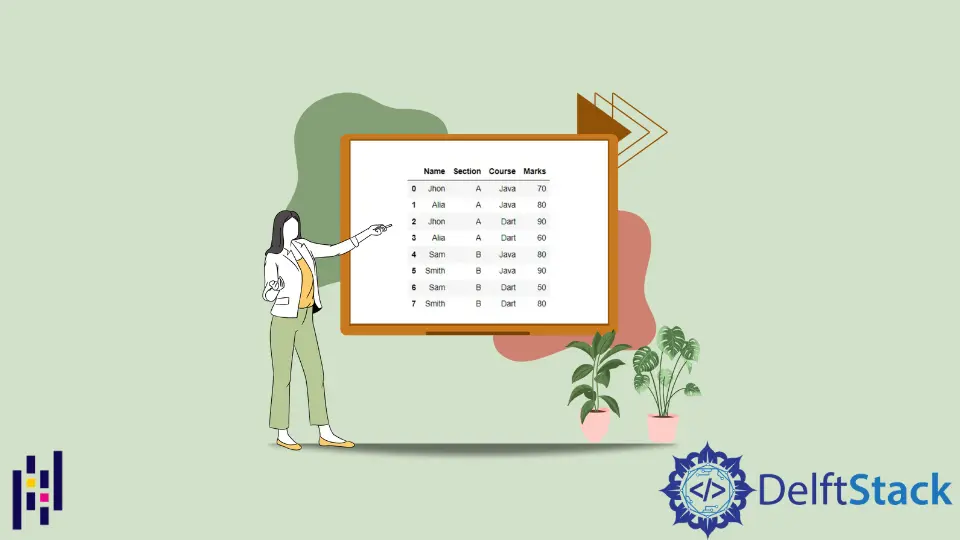
Grouping data is a fundamental operation in data analysis, allowing you to summarize and make sense of large datasets. In Python, the Pandas library provides powerful tools to group data by one or more columns and apply various aggregation functions. This tutorial will guide you through the process of grouping data based on multiple columns in a Pandas DataFrame and applying aggregate methods to obtain meaningful insights.
Whether you are analyzing sales data, customer information, or any other structured dataset, mastering the GroupBy and aggregate functions in Pandas can significantly enhance your data manipulation skills. By the end of this tutorial, you’ll be equipped with practical examples and clear explanations to help you group and aggregate data effectively in your projects.
Understanding GroupBy in Pandas
The groupby() function in Pandas is used to split the data into groups based on one or more columns. Once the data is grouped, you can perform various operations on these groups, such as calculating sums, averages, counts, and more. This powerful functionality allows you to derive insights from your data quickly.
To illustrate this, let’s consider a simple example where we have a DataFrame containing sales data with columns for the product category, region, and sales amount. We can group this data by both the category and region to analyze total sales for each combination.
import pandas as pd

data = {
    'Category': ['Electronics', 'Electronics', 'Furniture', 'Furniture', 'Clothing', 'Clothing'],
    'Region': ['North', 'South', 'North', 'South', 'North', 'South'],
    'Sales': [200, 300, 150, 400, 100, 250]
}

df = pd.DataFrame(data)

grouped = df.groupby(['Category', 'Region']).sum()

print(grouped)
Output:
                   Sales
Category    Region
Clothing    North     100
            South     250
Electronics North     200
            South     300
Furniture   North     150
            South     400
In this example, we created a DataFrame from a dictionary and then used the groupby() function to group the data by ‘Category’ and ‘Region’. The sum() function then computes the total sales for each group. This output shows the total sales for each combination of category and region, providing valuable insights into sales performance.
Aggregating with Multiple Functions
In many cases, you might want to apply multiple aggregation functions to your grouped data. Pandas allows you to do this seamlessly using the agg() method. This method lets you specify different functions for different columns, giving you flexibility in analyzing your data.
Let’s modify our previous example to calculate both total sales and the count of sales entries for each category and region combination.
aggregated = df.groupby(['Category', 'Region']).agg(
    Total_Sales=('Sales', 'sum'),
    Count_Sales=('Sales', 'count')
)

print(aggregated)
Output:
                   Total_Sales  Count_Sales
Category    Region
Clothing    North            100            1
            South            250            1
Electronics North            200            1
            South            300            1
Furniture   North            150            1
            South            400            1
In this code, we used the agg() method to calculate both the total sales and the count of sales for each group. The output DataFrame now contains two new columns: Total_Sales and Count_Sales, which provide a more comprehensive view of the sales data. This approach is particularly useful when you need to derive multiple metrics from your dataset.
Custom Aggregation Functions
Sometimes, predefined aggregation functions may not meet your needs. In such cases, you can define your custom aggregation functions and apply them to your grouped data. This is particularly useful for more complex calculations or when you want to implement specific business logic.
For instance, let’s create a custom function to calculate the range of sales (the difference between the maximum and minimum sales) for each category and region.
def sales_range(x):
    return x.max() - x.min()

custom_aggregated = df.groupby(['Category', 'Region']).agg(
    Sales_Range=('Sales', sales_range)
)

print(custom_aggregated)
Output:
                   Sales_Range
Category    Region
Clothing    North             0
            South             0
Electronics North             0
            South             0
Furniture   North             0
            South             0
In this example, we defined a custom function called sales_range that calculates the difference between the maximum and minimum sales values. We then applied this function using the agg() method. The output shows the sales range for each category and region. Custom aggregation functions allow for tailored analyses that can provide deeper insights into your data.
Conclusion
Mastering the GroupBy and aggregation techniques in Pandas is essential for anyone involved in data analysis. By grouping data based on multiple columns and applying various aggregation methods, you can uncover valuable insights that drive decision-making. Whether you’re summing sales, counting entries, or applying custom functions, Pandas offers the flexibility and power you need to analyze your data effectively.
As you continue to work with Pandas, keep experimenting with different aggregation functions and grouping strategies. The more you practice, the more proficient you will become in transforming raw data into actionable insights.
FAQ
-
What is the purpose of the groupby function in Pandas?
The groupby function is used to split the data into groups based on one or more columns, allowing you to perform aggregate functions on these groups. -
Can I use multiple aggregation functions at once in Pandas?
Yes, you can use the agg() method to apply multiple aggregation functions to different columns simultaneously. -
How do I create custom aggregation functions in Pandas?
You can define a custom function and then use it within the agg() method to apply it to your grouped data. -
What types of aggregation functions can I use in Pandas?
Pandas supports various aggregation functions, including sum, mean, count, min, max, and custom functions. -
Is it possible to group by multiple columns in Pandas?
Yes, you can group by multiple columns by passing a list of column names to the groupby() function.

I am Fariba Laiq from Pakistan. An android app developer, technical content writer, and coding instructor. Writing has always been one of my passions. I love to learn, implement and convey my knowledge to others.
LinkedIn