The collidepoint() Method in Pygame
- Understanding collidepoint()
- Basic Example of collidepoint()
- Advanced Usage of collidepoint()
- Conclusion
- FAQ
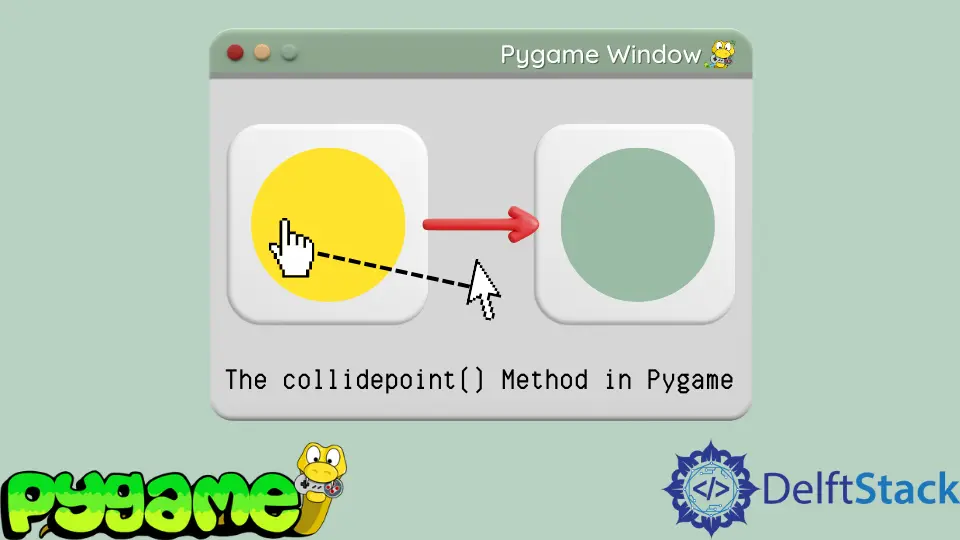
When developing games using Pygame, one of the essential tasks is detecting interactions between objects, such as whether a mouse click has occurred over a specific area. This is where the collidepoint() method comes into play. It is a fundamental function in Pygame that allows developers to check if a given point, like a mouse click, intersects with a defined rectangular area. Understanding how to effectively use this method can greatly enhance the interactivity of your game.
In this article, we will explore the collidepoint() method in Pygame, discussing its syntax, usage, and practical examples. Whether you are a beginner or an experienced developer, mastering this method is crucial for creating engaging and responsive game mechanics. Let’s dive in and see how you can leverage the collidepoint() method in your Pygame projects.
Understanding collidepoint()
The collidepoint() method is a part of the Rect class in Pygame. It is used to determine if a specific point—typically the mouse position—collides with a rectangle. This rectangle could represent any game object, such as a button, sprite, or any other interactive element.
The syntax for the collidepoint() method is straightforward:
rect.collidepoint(x, y)
Here, rect is an instance of the Rect class, and x and y are the coordinates of the point you want to check. If the point is within the rectangle, the method returns True; otherwise, it returns False. This simple yet powerful method is essential for event handling in games, allowing developers to create responsive interfaces.
Basic Example of collidepoint()
Let’s take a look at a basic example to illustrate how the collidepoint() method works. In this example, we will create a simple Pygame window with a rectangle drawn on it. We will then check if the mouse click occurs within that rectangle.
import pygame
import sys

pygame.init()
screen = pygame.display.set_mode((400, 300))
rect = pygame.Rect(150, 100, 100, 50)

while True:
    for event in pygame.event.get():
        if event.type == pygame.QUIT:
            pygame.quit()
            sys.exit()
        if event.type == pygame.MOUSEBUTTONDOWN:
            if rect.collidepoint(event.pos):
                print("Rectangle clicked!")

    screen.fill((255, 255, 255))
    pygame.draw.rect(screen, (0, 128, 255), rect)
    pygame.display.flip()
In this code, we initialize Pygame and create a window with a specified size. A rectangle is defined using the Rect class, positioned at (150, 100) with a width of 100 and height of 50. The main loop checks for events, particularly mouse button clicks. If a click occurs, we use the collidepoint() method to see if the click position is within the rectangle. If it is, a message is printed to the console.
Output:
Rectangle clicked!
This example demonstrates how simple it is to implement collision detection using the collidepoint() method. By responding to user input, you can create interactive elements in your game, enhancing the user experience.
Advanced Usage of collidepoint()
While the basic example is a great starting point, the collidepoint() method can be utilized in more complex scenarios. For instance, you might want to handle multiple rectangles or implement different responses based on which rectangle is clicked. Let’s explore how we can achieve this with a more advanced example.
import pygame
import sys

pygame.init()
screen = pygame.display.set_mode((400, 300))
rect1 = pygame.Rect(50, 50, 100, 100)
rect2 = pygame.Rect(200, 50, 100, 100)

while True:
    for event in pygame.event.get():
        if event.type == pygame.QUIT:
            pygame.quit()
            sys.exit()
        if event.type == pygame.MOUSEBUTTONDOWN:
            if rect1.collidepoint(event.pos):
                print("Rectangle 1 clicked!")
            elif rect2.collidepoint(event.pos):
                print("Rectangle 2 clicked!")

    screen.fill((255, 255, 255))
    pygame.draw.rect(screen, (255, 0, 0), rect1)
    pygame.draw.rect(screen, (0, 255, 0), rect2)
    pygame.display.flip()
In this advanced example, we create two rectangles on the screen. The program checks for mouse clicks and uses the collidepoint() method to determine which rectangle, if any, was clicked. Depending on the rectangle clicked, a different message is printed to the console.
Output:
Rectangle 1 clicked!
Rectangle 2 clicked!
This showcases the versatility of the collidepoint() method. You can easily extend this logic to handle various game elements, such as buttons, enemies, or collectibles, allowing for a more dynamic and engaging gameplay experience.
Conclusion
The collidepoint() method in Pygame is a powerful tool for detecting interactions between user inputs and game objects. By understanding its functionality and applying it in different contexts, you can create more interactive and responsive game mechanics. Whether you are developing a simple game or a complex project, mastering this method will significantly enhance your Pygame development skills. As you continue to explore Pygame, remember that effective collision detection is key to engaging gameplay, and the collidepoint() method is an essential part of that equation.
FAQ
-
what is the purpose of the collidepoint() method in Pygame?
The collidepoint() method checks if a specific point, like a mouse click, intersects with a defined rectangular area. -
how do I check for multiple rectangles using collidepoint()?
You can use multipleifstatements to check each rectangle’s collision with the point. -
can collidepoint() be used for shapes other than rectangles?
No, collidepoint() is specifically designed for rectangles. For other shapes, you would need different collision detection methods. -
does collidepoint() return any values?
Yes, it returnsTrueif the point is within the rectangle andFalseotherwise. -
is Pygame suitable for beginners?
Yes, Pygame is beginner-friendly and provides a solid foundation for learning game development.

Hi, my name is Maxim Maeder, I am a young programming enthusiast looking to have fun coding and teaching you some things about programming.
GitHub