Difference Between ::: And ++ for Concatenating Lists in Scala
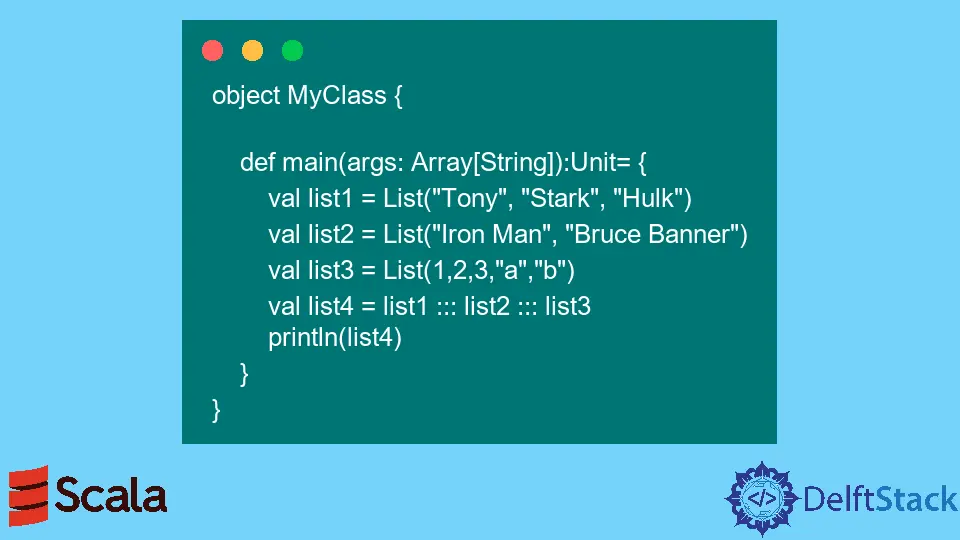
When working with lists in Scala, you often need to combine or concatenate them. Two operators that can help you achieve this are ::: and ++. While they may seem similar at first glance, they have distinct behaviors and use cases that can significantly affect your code’s performance and readability. Understanding the differences between these two operators is crucial for any Scala developer looking to write efficient and clean code.
In this article, we’ll delve into the nuances of ::: and ++, exploring their syntax, functionality, and performance implications. By the end, you’ll have a clearer understanding of when to use each operator for concatenating lists in Scala. Whether you’re a seasoned developer or just starting your Scala journey, this knowledge will enhance your coding skills and improve your applications.
Understanding the ::: Operator
The ::: operator is specifically designed for concatenating lists in Scala. It combines two lists into one, where the left-hand list is followed by the right-hand list. It is important to note that ::: is a method of the List class and is used to concatenate only lists. The result is a new list containing all elements from both lists.
Here’s a simple example to illustrate how ::: works:
val list1 = List(1, 2, 3)
val list2 = List(4, 5, 6)
val concatenatedList = list1 ::: list2

println(concatenatedList)
Output:
List(1, 2, 3, 4, 5, 6)
In this example, we have two lists, list1 and list2. By using the ::: operator, we concatenate these lists into a new list called concatenatedList. The result shows that all elements from list1 are followed by the elements from list2.
One key aspect of ::: is that it is a non-destructive operation; the original lists remain unchanged. This immutability is a core principle in Scala, promoting safer and more predictable code.
Exploring the ++ Operator
The ++ operator is another way to concatenate lists in Scala, but it is more versatile than :::. While it can also be used to concatenate two lists, ++ can work with other collections, such as arrays and sets. This makes it a more flexible option for combining different types of collections.
Let’s see how ++ works with a practical example:
val list1 = List(1, 2, 3)
val list2 = List(4, 5, 6)
val concatenatedList = list1 ++ list2

println(concatenatedList)
Output:
List(1, 2, 3, 4, 5, 6)
In this code snippet, we again have two lists, list1 and list2. By using the ++ operator, we concatenate them into concatenatedList, yielding the same result as with :::. However, the ++ operator can also be used to concatenate other types of collections, making it a more general-purpose tool.
For instance, if you have an array that you want to concatenate with a list, you can easily do so with ++:
val array = Array(7, 8, 9)
val concatenatedList = list1 ++ array

println(concatenatedList)
Output:
List(1, 2, 3, 7, 8, 9)
This flexibility is one of the reasons why many Scala developers prefer ++ for concatenating collections, especially when working with diverse data types.
Performance Considerations
While both ::: and ++ are effective for concatenating lists, their performance can differ based on the context. The ::: operator is generally faster when working with two lists because it is optimized for that specific operation. However, if you’re dealing with multiple collections or different types, ++ may be the better choice due to its versatility.
When using ::: to concatenate lists, the operation involves creating a new list that references the elements of the original lists. This makes it efficient for list concatenation. In contrast, ++ may involve additional overhead when combining different collection types, as it needs to handle type conversions and ensure compatibility.
In conclusion, if you are strictly working with lists, ::: is often the preferred option for its speed and simplicity. However, if you need to combine various collection types, ++ will serve you better despite potentially being slower.
Conclusion
In summary, understanding the differences between the ::: and ++ operators for concatenating lists in Scala is essential for writing efficient and maintainable code. The ::: operator is optimized for list concatenation, while ++ offers greater flexibility for combining different types of collections. By choosing the right operator for your specific needs, you can enhance your Scala programming skills and improve the performance of your applications.
Whether you’re building complex systems or simple scripts, knowing when to use each operator will make you a more effective Scala developer.
FAQ
-
What is the main difference between ::: and ++ in Scala?
The main difference is that:::is specifically for concatenating lists, while++can concatenate various collection types, including lists, arrays, and sets. -
Which operator is faster for concatenating two lists?
The:::operator is generally faster for concatenating two lists due to its optimization for that specific operation. -
Can I use ++ to concatenate an array with a list?
Yes, you can use the++operator to concatenate an array with a list, making it a versatile choice for combining different types of collections. -
Are the original lists modified when using ::: or ++?
No, both operators create a new list and do not modify the original lists, adhering to Scala’s immutability principles. -
When should I use ::: instead of ++?
Use:::when you are only working with lists and want a faster concatenation method. Opt for++when you need to combine different types of collections.