TypeScript Typeof
- What is the Typeof Operator?
- Using Typeof in Type Guards
- Combining Typeof with Other TypeScript Features
- Practical Applications of Typeof
- Conclusion
- FAQ
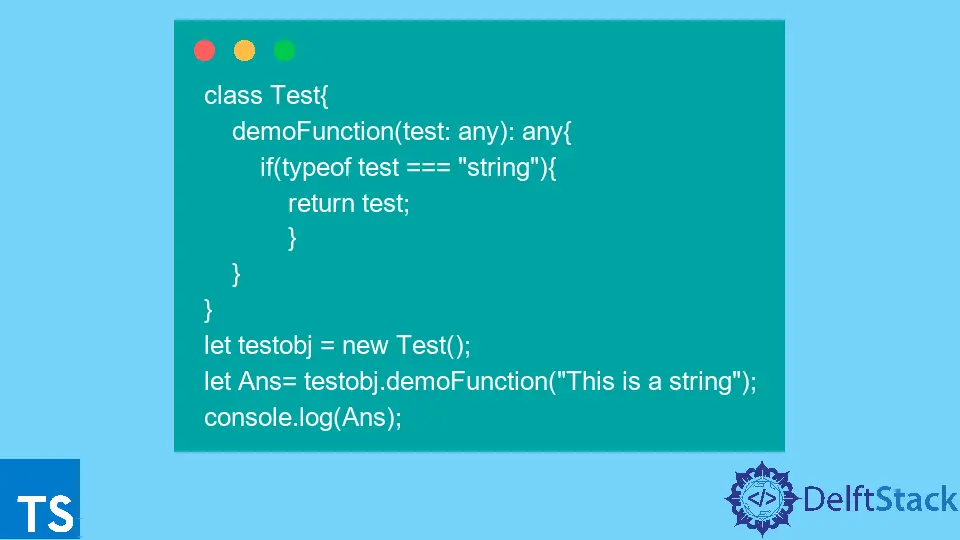
TypeScript is a powerful superset of JavaScript that adds static typing to the language, enhancing code quality and maintainability. One of its fundamental features is the typeof operator, which allows developers to determine the type of a variable at runtime. This tutorial will dive into the intricacies of the typeof operator in TypeScript, illustrating its utility and providing practical examples to help you understand how to leverage it effectively in your projects.
In this guide, you will learn how to use the typeof operator in various scenarios, including how it behaves with different data types, and how you can employ it in type guards. By the end of this tutorial, you will have a clear understanding of how to use typeof effectively to enhance your TypeScript code.
What is the Typeof Operator?
The typeof operator is a built-in JavaScript operator that is fully supported in TypeScript. It returns a string indicating the type of the unevaluated operand. The operand can be any variable, function, or object. The result can be one of the following types: “undefined”, “object”, “boolean”, “number”, “string”, “function”, or “symbol”.
To demonstrate, let’s look at a simple example:
let num = 42;
let str = "Hello, TypeScript!";
let isActive = true;

console.log(typeof num);
console.log(typeof str);
console.log(typeof isActive);
Output:
number
string
boolean
In this example, we declare three variables of different types: a number, a string, and a boolean. The typeof operator is used to log their types to the console. As you can see from the output, typeof accurately identifies the types of each variable, making it a valuable tool for debugging and ensuring type safety in your code.
Using Typeof in Type Guards
Type guards are a powerful feature in TypeScript that allow you to narrow down the type of a variable within a conditional block. The typeof operator can be used as a type guard to ensure that variables are of a specific type before performing operations on them. This is particularly useful in functions that accept multiple types.
Consider the following example, where we create a function that handles both numbers and strings:
function processValue(value: number | string) {
    if (typeof value === "number") {
        console.log(value * 2);
    } else if (typeof value === "string") {
        console.log(value.toUpperCase());
    }
}

processValue(10);
processValue("hello");
Output:
20
HELLO
In this code, the processValue function takes a parameter that can either be a number or a string. Inside the function, we use typeof to check the type of value. If it’s a number, we double it; if it’s a string, we convert it to uppercase. This demonstrates how typeof can be effectively used in type guards to ensure that operations are performed safely and correctly.
Combining Typeof with Other TypeScript Features
The versatility of the typeof operator becomes even more apparent when combined with other TypeScript features, such as interfaces and type aliases. You can create a type alias based on the type of an existing variable, which can improve code clarity and reusability.
Here’s an example that illustrates this concept:
const user = {
    name: "Alice",
    age: 30,
};

type UserType = typeof user;

const newUser: UserType = {
    name: "Bob",
    age: 25,
};
In this example, we define an object user and then create a type alias UserType using typeof user. This allows us to define newUser with the same structure as user, ensuring type consistency across our codebase. This approach not only enhances readability but also helps prevent errors by enforcing type checks.
Practical Applications of Typeof
The typeof operator is not just a tool for checking variable types; it has practical applications in various scenarios, such as validating user input or dynamically handling different types of data. For instance, when dealing with data from APIs, you often need to check the type of incoming data before processing it.
Consider a scenario where you receive data from an API that can return either a number or a string. You can use typeof to validate and process the data safely:
function handleApiResponse(response: number | string) {
    if (typeof response === "number") {
        console.log(`Received a number: ${response}`);
    } else {
        console.log(`Received a string: ${response}`);
    }
}

handleApiResponse(42);
handleApiResponse("API response");
Output:
Received a number: 42
Received a string: API response
In this example, the handleApiResponse function checks the type of the response parameter using typeof. Depending on whether the response is a number or a string, it logs an appropriate message. This kind of type checking is crucial for building robust applications that can handle various data types gracefully.
Conclusion
In summary, the typeof operator in TypeScript is an essential tool for developers. It allows you to determine the types of variables at runtime, facilitating type safety and error prevention in your code. By understanding how to use typeof effectively, you can enhance your TypeScript applications, ensuring they are more robust and maintainable. Whether you are using it in type guards, creating type aliases, or validating API responses, mastering typeof will undoubtedly improve your coding experience.
FAQ
-
What is the purpose of the typeof operator in TypeScript?
The typeof operator is used to determine the type of a variable at runtime, providing valuable insights into the data being handled. -
Can typeof be used with custom types in TypeScript?
No, typeof only works with built-in types like number, string, boolean, etc. For custom types, you should use type guards or interfaces. -
How does typeof differ from instanceof in TypeScript?
typeof checks for primitive types, while instanceof checks for object types and their prototypes. -
Is typeof a runtime or compile-time operator in TypeScript?
typeof is a runtime operator, meaning it evaluates the type of a variable during execution rather than at compile time. -
Can I use typeof in type assertions?
While you can use typeof for type checks, type assertions in TypeScript are done using theaskeyword or angle-bracket syntax, not typeof.

Rana is a computer science graduate passionate about helping people to build and diagnose scalable web application problems and problems developers face across the full-stack.
LinkedIn