二叉搜索树迭代插入
在上一篇文章二叉搜索树中,我们讨论了在 BST 中插入节点的递归方法。在这篇文章中,我们将讨论在 BST 中插入一个节点的迭代方法。它比递归方法更好,因为迭代插入算法不需要额外的空间。
二叉搜索树迭代插入算法
假设 root 是 BST 的根节点,key 是我们要插入的元素。
-
创建要插入的节点-
toinsert。 -
初始化两个指针,
curr指向root,prev指向 null。(curr遍历树,prev保持其踪迹)。 -
当
curr!=NULL时,执行以下操作。- 更新
prev为curr,以保持其踪迹。 - 如果
curr->data>key,设置curr为curr->left,丢弃右侧子树。 - 如果
curr->data<key,设置curr为curr->right,丢弃左侧子树。
- 更新
-
如果
prev==NULL,说明树是空的。创建root节点。 -
否则如果
prev->data>key,则在prev的左边插入toinsert,prev->left=toinsert。 -
否则如果
prev->data<key,则在prev的右边插入toinsert,prev->right=toinsert。
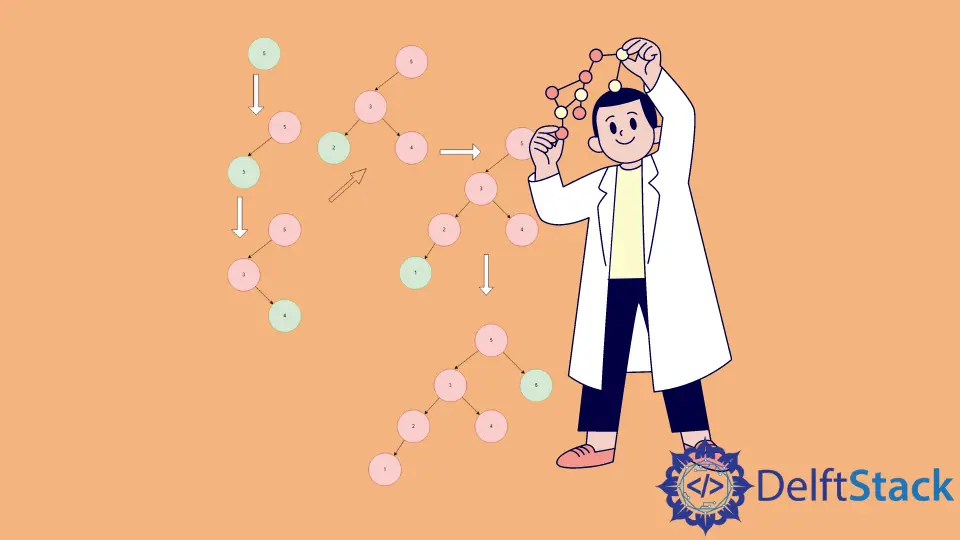
BST 迭代插入图解

-
首先,我们通过创建一个
root节点来初始化 BST,并在其中插入5。 -
3比5小,所以被插入5的左边。 -
4比5小,但比3大,所以插入3的右边,但插入4的左边。 -
2是当前树中最小的元素,所以它被插入到最左边的位置。 -
1是当前树中最小的元素,所以它被插入到最左边的位置。 -
6是当前树中最大的元素,所以它被插入到最右边的位置。
这就是我们在 BST 内部插入元素的方法。
二叉搜索树插入的迭代实现
#include <iostream>
using namespace std;

class Node {
 public:
  int key;
  Node *left, *right;
};

Node *newNode(int item) {
  Node *temp = new Node;
  temp->key = item;
  temp->left = temp->right = NULL;
  return temp;
}

void inorder(Node *root) {
  if (root != NULL) {
    inorder(root->left);
    cout << root->key << " ";
    inorder(root->right);
  }
}

void insert(Node *&root, int key) {
  Node *toinsert = newNode(key);
  Node *curr = root;
  Node *prev = NULL;

  while (curr != NULL) {
    prev = curr;
    if (key < curr->key)
      curr = curr->left;
    else
      curr = curr->right;
  }
  if (prev == NULL) {
    prev = toinsert;
    root = prev;
  }

  else if (key < prev->key)
    prev->left = toinsert;

  else
    prev->right = toinsert;
}

int main() {
  Node *root = NULL;
  insert(root, 5);
  insert(root, 3);
  insert(root, 8);
  insert(root, 6);
  insert(root, 4);
  insert(root, 2);
  insert(root, 1);
  insert(root, 7);
  inorder(root);
}
二叉搜索树插入迭代算法的复杂度
时间复杂度
- 平均情况
在平均情况下,在 BST 中插入一个节点的时间复杂度与二叉搜索树的高度相当。平均来说,一个 BST 的高度是 O(logn)。当形成的 BST 是一个平衡的 BST 时,就会出现这种情况。因此,时间复杂度是 [Big Theta]:O(logn)。
- 最佳情况
最好的情况是,该树是一个平衡的 BST。最佳情况下,插入的时间复杂度为 O(logn)。它与平均情况下的时间复杂度相同。
- 最坏情况
在最坏的情况下,我们可能要从根节点遍历到最深的叶子节点,即树的整个高度 h。如果树是不平衡的,即它是倾斜的,树的高度可能会变成 n,因此插入和搜索操作的最坏情况下的时间复杂度是 O(n)。
空间复杂度
迭代插入操作的空间复杂度为 O(1),因为不需要额外的空间。
Enjoying our tutorials? Subscribe to DelftStack on YouTube to support us in creating more high-quality video guides. Subscribe
作者: Harshit Jindal

Harshit Jindal has done his Bachelors in Computer Science Engineering(2021) from DTU. He has always been a problem solver and now turned that into his profession. Currently working at M365 Cloud Security team(Torus) on Cloud Security Services and Datacenter Buildout Automation.
LinkedIn